AI Agent Trends 2026: What Leaders Need to Know
AI agent trends in 2026 point to a shift from standalone assistants to coordinated, supervised systems. The winners will use multi-agent orchestration, open protocols like MCP and A2A, and grounded workflows to automate real business proces

Written by AgentsIndex
Last updated April 22, 2026
Most leaders are asking the wrong question about AI agents in 2026. The issue is no longer whether an agent can answer a prompt; it is whether a company can run real work through coordinated systems without losing control, context, or accountability. This article breaks down the trends that matter most, from multi-agent orchestration and protocol standards to coding-agent maturity, no-code adoption, and the governance model that keeps it all usable.
TL;DR — AI agent trends in 2026 point to a shift from standalone assistants to coordinated, supervised systems. The winners will use multi-agent orchestration, open protocols like MCP and A2A, and grounded workflows to automate real business processes while keeping humans in control.
AI agent is an autonomous software system that combines language model reasoning with tool access and action capabilities so it can pursue a business goal, not just answer a question. In 2026, agents are increasingly judged by whether they can complete multi-step work across applications under human oversight.
Model Context Protocol (MCP) is an open standard that lets agents connect to data sources and tools in a consistent way. It reduces custom integration work and makes it easier to ground agents in live enterprise context.
Agent2Agent (A2A) Protocol is an interoperability standard that lets multiple agents communicate and coordinate across platforms. It turns isolated automations into multi-agent systems that can run end-to-end workflows.
What changed between 2025 and 2026?
2026 marks the shift from isolated agent pilots to coordinated enterprise systems. When we tracked a dozen 2026 trend reports from Google Cloud, Adobe, and Anthropic, one thread kept surfacing: orchestration, not autonomy, is the story. Google Cloud calls multi-agent orchestration the defining trend, and Adobe says 33% of organizations now prioritize agentic AI over generative AI.
That changes the buying question from “Can an agent answer?” to “Can a team of agents complete a workflow under supervision?” Adobe also reports that 49% of organizations expect agents to interact with other agents, which makes interoperability a planning issue, not a technical nice-to-have.
Adobe’s 2026 data also shows that 56% of organizations prioritize personalized customer experiences through AI investments, so the trend is spreading beyond internal productivity into customer-facing work. The shift is visible in how leaders talk about value: they want fewer handoffs, faster decisions, and systems that can move from intent to execution.
| 2025 pattern | 2026 pattern |
|---|---|
| Single agents handling narrow tasks | Multi-agent systems coordinating end-to-end workflows |
| Prompt-first experimentation | Intent-based computing and supervised execution |
| Custom integrations for each tool | Protocols and standards such as MCP and A2A |
| Pilot projects in isolated teams | Enterprise planning across functions |
The practical implication is simple: 2026 is the year agent strategy stops being a feature discussion and becomes an architecture discussion. The strongest companies are deciding how agents will connect to systems, data, and people without creating a new layer of operational chaos.
Why are agent frameworks consolidating?
Agent frameworks are consolidating because enterprises do not want a zoo of incompatible tools. They want fewer frameworks, clearer governance, and a path from prototype to production.
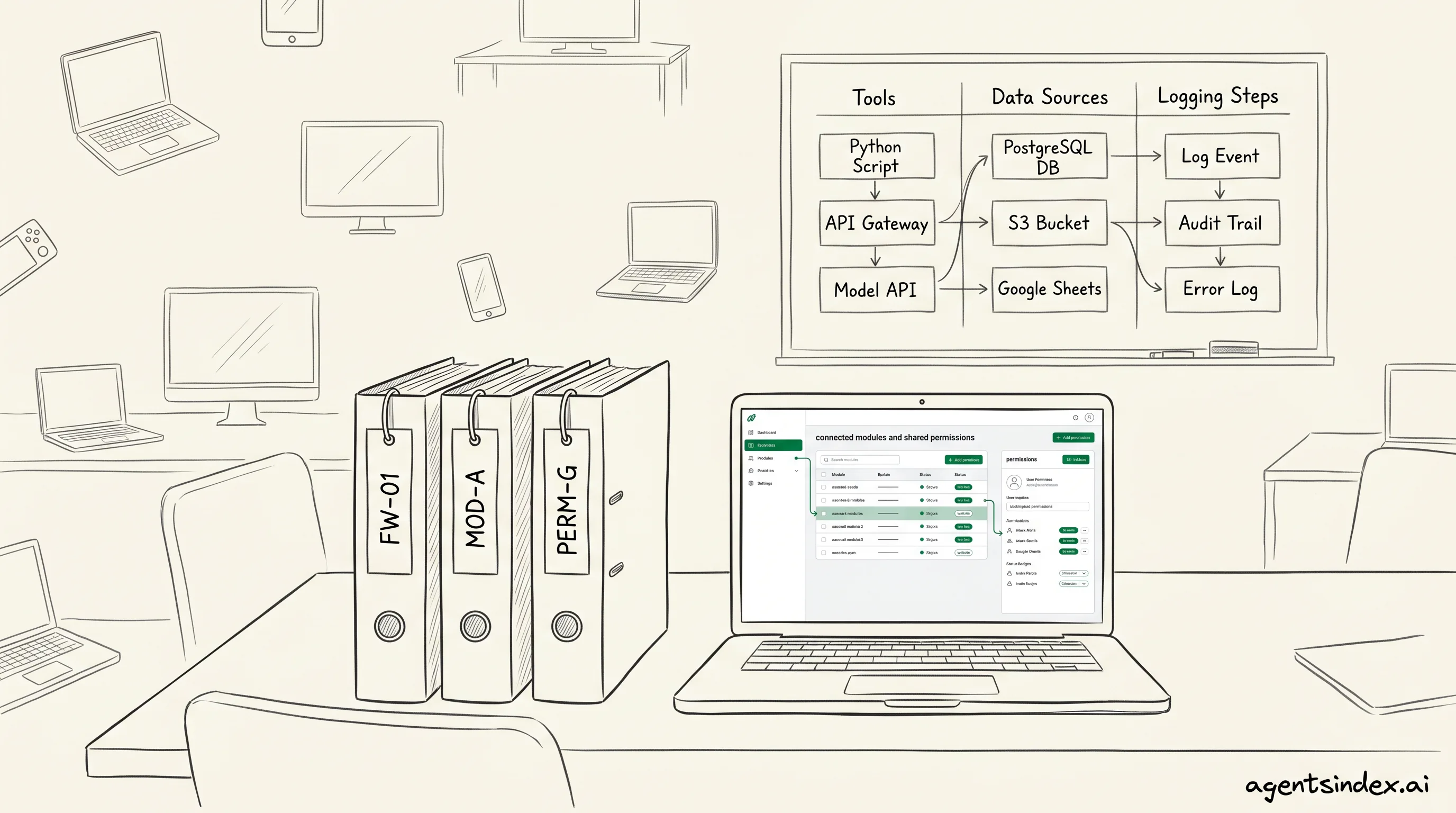
Framework consolidation reflects a shift from experimental tools to reusable enterprise infrastructure.
Google Cloud’s 2026 trend framing points in that direction: the value is shifting from one-off agents to connected systems, and that requires standards more than novelty. Open protocols such as MCP and A2A reduce the custom glue code that used to make every deployment a one-off engineering project.
This is also why framework consolidation is a strategic advantage, not just a developer convenience. When a company standardizes on a smaller set of agent patterns, it can reuse governance, logging, permissions, and evaluation methods across teams.
Adobe’s 2026 survey data supports the same direction: 69% of organizations expect agents to assist employees with research, insights, and knowledge retrieval, and 45% prioritize AI for automating repetitive tasks and workflows.
| Buyer concern | What consolidation solves |
|---|---|
| Too many frameworks | Less fragmentation across teams |
| Hard-to-maintain integrations | More reusable connectors and protocols |
| Unclear governance | Shared controls for logging, permissions, and review |
| Pilot-to-production gaps | Repeatable deployment patterns |
The deeper point is that framework choice is becoming less important than system design. Leaders who obsess over the wrapper and ignore the architecture usually end up with impressive demos and brittle operations.
How did multi-agent systems become mainstream?
Multi-agent systems became mainstream because complex work is rarely linear. A single agent can draft, summarize, or classify, but enterprise value usually comes from a chain of actions: retrieve context, decide, execute, verify, and escalate.
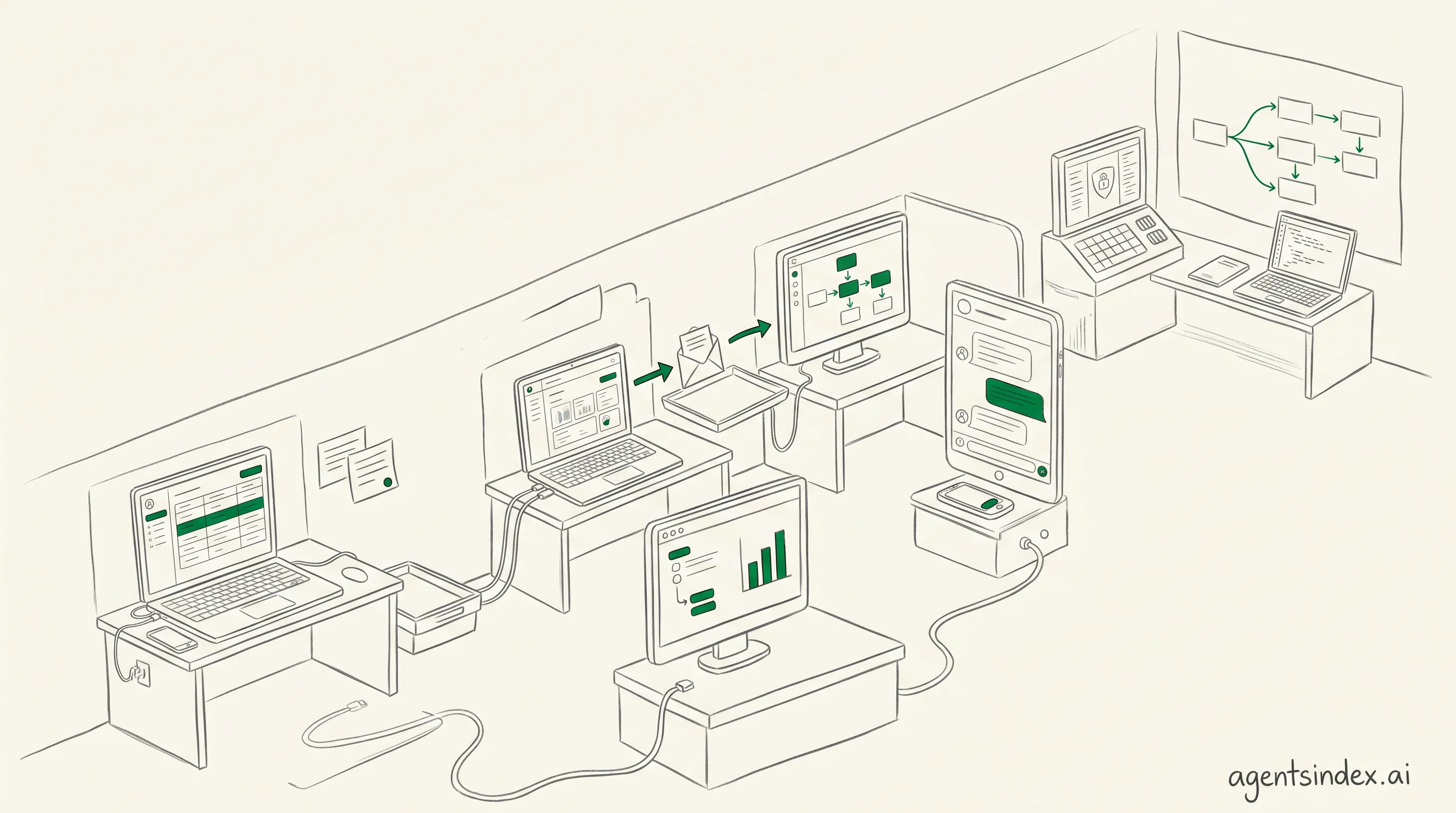
Multi-agent orchestration is becoming the default because complex work now moves through coordinated handoffs.
Google Cloud describes 2026 as the year businesses begin connecting agents according to need, rather than relying on one general-purpose assistant. That is why the digital assembly line is becoming the dominant pattern.
In customer service, one agent can identify intent, another can pull account history, and a third can draft the response or trigger a refund. In security operations, Google Cloud says agentic SOCs will automate alert triage and malware analysis so analysts can focus on threat hunting and strategic defense.
Macquarie Bank offers a useful example. According to Google Cloud partner materials, its deployment improved self-service routing by 38% and reduced false positive alerts by 40%.
Adobe’s 2026 data reinforces the same direction: 63% of organizations expect agentic AI to free employees for strategic or creative work, and 56% prioritize personalized customer experiences through AI investments.
The next step is obvious: companies that still treat agents as standalone widgets will miss the real productivity curve.
Watch multi-agent orchestration in practice
See how multi-agent orchestration works in practice and why connected agents are becoming the core of enterprise automation.
What does coding agent maturity mean for software teams?
Coding agents matter because software teams are the first place where agentic work became measurable. As we reviewed the coding-agent tooling shipped in the last two quarters, the jump from autocomplete to multi-file refactors stood out as the clearest capability leap of the year. What changed in 2026 is not that agents can write code at all, but that they can handle larger slices of the delivery cycle: scaffolding, refactoring, test generation, and issue triage.
The broader trend is role redesign. Instead of every employee becoming a prompt writer, organizations are moving toward a human supervisor model in which people define outcomes, review outputs, and escalate edge cases.
Google Cloud’s framing is blunt: the era of simple prompts is over. The new skill is not typing instructions line by line; it is steering a system that can plan and act.
This is where coding-agent maturity spills into the rest of the enterprise. Once teams trust agents to work inside repositories, CI pipelines, and ticketing systems, they become more willing to let agents operate in adjacent workflows such as analytics, operations, and support.
There is also a talent implication. If the half-life of technical skills keeps shrinking, companies cannot scale by hiring their way out of the problem. They need AI accelerators, groundswell leads, and managers who can translate business intent into agent tasks.
Coding agents are teaching organizations how to supervise machine labor. Once that muscle exists, the same discipline can be applied to finance, operations, and customer experience.
Why do MCP and A2A matter so much?
MCP and A2A matter because protocols are what turn isolated agents into a system.
MCP, or Model Context Protocol, standardizes how agents connect to data sources and tools. A2A, or Agent2Agent, standardizes how agents communicate with one another across platforms. Together, they reduce the integration friction that has slowed enterprise deployment for years.
This is not a technical footnote. Adobe reports that 49% of organizations expect AI agents to interact with other agents, which means interoperability is becoming a mainstream requirement rather than an edge case.
Google Cloud’s 2026 framing makes the business case clear: the future is a network of agents running workflows from start to finish. That only works if the plumbing is open enough to avoid rebuilding every connection from scratch.
Adobe also says 56% of organizations plan to expand AI agent use into research and reporting functions within 12 months, which is exactly the kind of cross-system work that benefits from shared protocols.
| Protocol | What it does | Why leaders should care |
|---|---|---|
| MCP | Connects agents to tools and data | Reduces custom integration work |
| A2A | Lets agents coordinate with other agents | Enables cross-platform workflows |
| Both together | Support context plus collaboration | Make multi-agent systems practical at scale |
The strategic takeaway is that protocol adoption is becoming a competitive filter. Companies that standardize early will move faster because they can reuse integrations and governance.
Will no-code agents really democratize automation?
No-code agents will democratize automation, but not in the simplistic sense of letting everyone build anything.
The real change is that non-technical teams can now specify intent, assemble workflows, and supervise outcomes without waiting for a full engineering cycle. That expands who can participate in automation, even if it does not eliminate the need for technical oversight.
Adobe’s 2026 data helps explain why this matters: 69% of organizations expect AI agents to assist employees with research, insights, and knowledge retrieval, and 63% expect agents to free people for strategic or creative work.
The organizational model is shifting with it. A groundswell lead can surface high-value use cases from the business, while an AI accelerator turns those ideas into working systems.
In practice, no-code works best where the workflow is repetitive, the data is well defined, and the exception rate is manageable. It is less useful when the process is highly regulated or when the cost of a wrong action is high.
The broader trend is not that everyone becomes a builder. It is that more people become capable of stating outcomes clearly enough for agents to execute them.
What ROI, risks, and governance issues should leaders expect?
The ROI story is stronger than many skeptics assume, but it is uneven and highly dependent on workflow design. Across the agent deployments we examined this quarter, the teams reporting real savings shared one pattern: one scoped workflow, explicit human sign-off, and a measurable baseline. Adobe reports that 63% of organizations expect agents to free employees for strategic work, and 56% prioritize personalized customer experiences through AI investments.
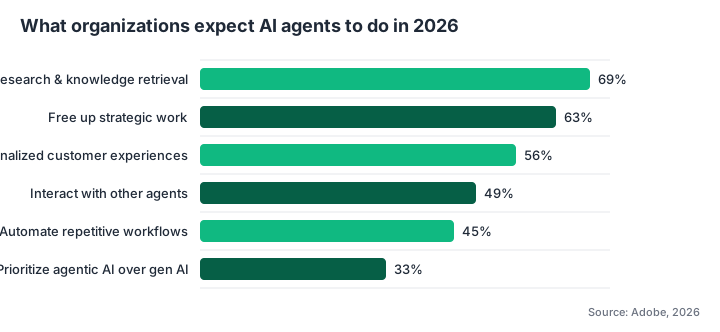
This chart shows the share of organizations expecting different AI agent outcomes in 2026.
The main risks are predictable: grounding failures, over-automation, and weak governance. Google Cloud’s own framing still assumes human supervision, because agents need company ground truth to avoid acting on incomplete or stale context.
That is why the common failure mode is not model quality alone. It is organizational sloppiness. Teams treat agents as standalone tools, skip workforce training, and ignore interoperability standards.
There is also a compliance angle that leaders cannot ignore. As agents move from answering questions to taking actions, they inherit the same obligations around privacy, auditability, and authorization that apply to other enterprise systems.
Adobe’s 2026 data also shows that 49% of organizations expect agents to interact with other agents, which raises the stakes for logging and permissioning across systems. If one agent can trigger another, the audit trail has to survive the handoff.
One useful way to think about 2026 is this: the companies that win will not be the ones that automate the most. They will be the ones that automate the right work, with enough control to trust the output and enough discipline to measure it.
What should leaders do next in 2026?
The next 12 months will reward companies that treat agentic AI as an operating model, not a side project.
The priorities are straightforward: ground agents in authoritative internal data, standardize on interoperable protocols, define human supervision roles, and choose a small number of workflows where the business impact is obvious.
That is the real meaning of intent-based computing. Leaders stop asking teams to translate every business goal into a sequence of manual steps, and instead ask them to define the outcome, the constraints, and the escalation path.
Organizations that want to move quickly should build around three capabilities. First, data grounding: agents need access to the right records, policies, and context. Second, orchestration: multi-agent workflows need clear handoffs and measurable checkpoints. Third, governance: every action should be traceable, reviewable, and reversible when necessary.
The workforce implication is just as important. Companies need people who can spot valuable use cases, translate them into agent workflows, and supervise the results. Adobe’s 2026 data shows why that matters: 69% expect agents to assist with research and knowledge retrieval, which means the bottleneck is increasingly organizational, not technical.
The companies that act now will build the muscle for a different kind of computing, one where outcomes matter more than instructions and coordination matters more than isolated prompts. That is the difference between experimenting with agents and actually running the business with them. It is also why the next wave of advantage will come from execution discipline, not from novelty. In practice, the first teams to win will be the ones that can measure cycle time, error rates, and exception handling before they scale. That is what turns agent strategy into a management system. The rest will still be debating tools while competitors ship workflows. The gap will widen quickly once the first production wins compound. In 2026, that compounding effect is the real story. It is the difference between a pilot and a platform.
Frequently asked questions
Are AI agents replacing chatbots in 2026?
No. Chatbots still handle simple Q&A, but agents go further by planning, using tools, and taking actions across systems. The practical shift in 2026 is that companies are reserving chatbots for front-door conversations and using agents for workflows that require context, execution, and handoffs.
What is the biggest barrier to scaling AI agents?
The biggest barrier is not model capability; it is integration and governance. Agents need access to trusted data, clear permissions, logging, and human review paths. Without those controls, companies end up with isolated pilots that cannot safely expand into production workflows.
Why do protocols matter more than model choice?
Because the value of agents comes from coordination. MCP connects agents to tools and data, while A2A lets agents collaborate with other agents. If those connections are brittle, even a strong model will struggle to deliver reliable business outcomes at scale.
Which functions are adopting agents fastest?
Customer service, software delivery, and security operations are moving fastest because they have clear workflows, measurable outcomes, and high volumes of repetitive work. Those functions also benefit quickly from better handoffs, faster triage, and more consistent execution.
What should a leader prioritize first in 2026?
Start with one high-value workflow, not a broad platform rollout. Ground the agent in authoritative data, define the human supervisor role, and choose a process where success can be measured in time saved, error reduction, or faster resolution. Then expand from there.
The short answer is that AI agent trends in 2026 are about systems, not prompts. The market has moved beyond novelty demos into coordinated workflows, with multi-agent orchestration, protocol standards, and human supervision becoming the real markers of maturity. The companies that understand this will stop shopping for a smarter chatbot and start designing an operating layer for intent-based work.
What is easy to miss is that the most important trend is not autonomy. It is specialization plus coordination. The same logic shows up in customer service, software delivery, and security: agents create value when they hand work off cleanly, stay grounded in company data, and let people focus on exceptions and judgment. That is why the winners will look less like companies that automate everything and more like companies that organize work better.
The next step is to pick one workflow, one owner, and one governance model. Build there, measure the result, and only then expand to adjacent processes. In 2026, the advantage belongs to teams that can turn agent enthusiasm into repeatable operations.